Bringing a cat home is exciting — and then, usually within the first hour, you discover that your new roommate treats your houseplants like a salad bar, your curtains like a climbing wall, and your bookshelf like a launch pad. Pet-proofing for a cat is not about making your home look like a fortress; it is about thinking like a cat and quietly removing the biggest risks before curiosity gets the better of them.
This 2026 room-by-room guide walks you through exactly what to secure, what to move, and what to buy — on a realistic budget — so your home is safe from day one. It pairs well with our new kitten first-week checklist if you are starting from scratch.
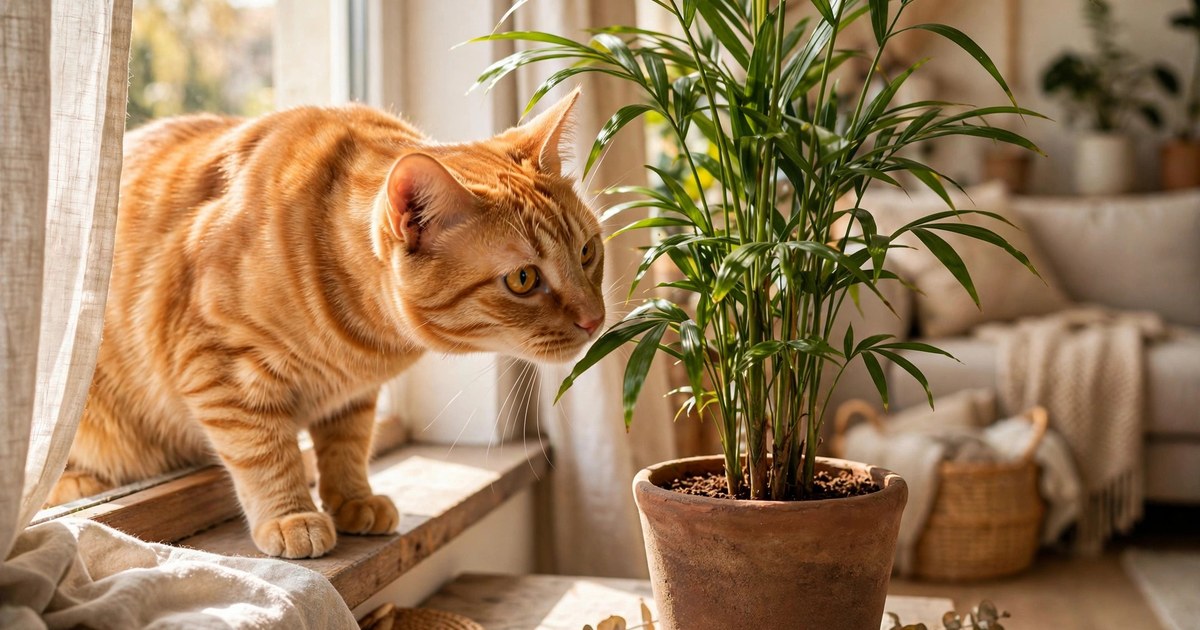
Think Like a Cat First
Cats explore the world with their mouths, paws, and vertical instincts. Before you start rearranging furniture, it helps to know what a cat is actually looking for when it investigates your home:
- Height: cats feel safe up high. Shelves, fridges, curtain rods, and door tops are all invitations.
- Texture: anything that scratches, rustles, or dangles gets tested with teeth and claws.
- Hiding spots: boxes, laundry piles, open bags, and small gaps behind furniture are irresistible.
- Movement: dangling cords, fluttering curtains, and swinging blind cords trigger the chase instinct.
Once you see your home through that lens, the fixes become obvious. The ASPCA's cat care resources cover the basics of feline behavior if you want to go deeper.
The Living Room: Cords, Curtains & Climbing
The living room is where most cats spend their day, and it is where the most common household risks hide in plain sight.
- Hide every cord. TV cables, phone chargers, lamp cords, and game console wires all need to go into cord covers or be tucked behind furniture. A chewing cat and an electrical cord are a bad combination — cord covers cost a few dollars and take minutes to install.
- Secure heavy furniture. Bookcases, tall dressers, and TV stands should be anchored to the wall or heavy enough to be climb-proof. A cat leaping onto a wobbly shelf can topple it.
- Skip breakables on low shelves. Move vases, picture frames, and ceramics up high or into closed cabinets for the first few weeks until you learn your cat's jumping range (which is higher than you think).
- Check the recliner and sofa. Recliners can trap cats in the mechanism; always check before closing one. Cats also love slipping inside torn sofa linings — patch or replace torn dust covers.

The Kitchen: The Most Dangerous Room in the House
Kitchens smell amazing to a cat, which makes them the room that needs the most attention.
- Lock the lower cabinets. Child-proof latches work perfectly for cats and keep paws away from cleaning products, trash bags, and sharp objects.
- Take out the trash on time. Secure bins with locking lids. Food scraps, bones, and packaging are all tempting — and a knocked-over bin is a mess you do not want to clean.
- Keep the stove and oven closed. Cats are drawn to warmth. Check the oven before preheating, keep stovetop covers on, and never leave a hot pan unattended within jumping distance.
- Store small items out of reach. Rubber bands, twist ties, hair ties, and plastic wrap are all choking hazards cats love to bat around and swallow.
- Close the dishwasher and fridge. Cats crawl in, doors close, and nobody notices. Make it a habit to check before shutting either.
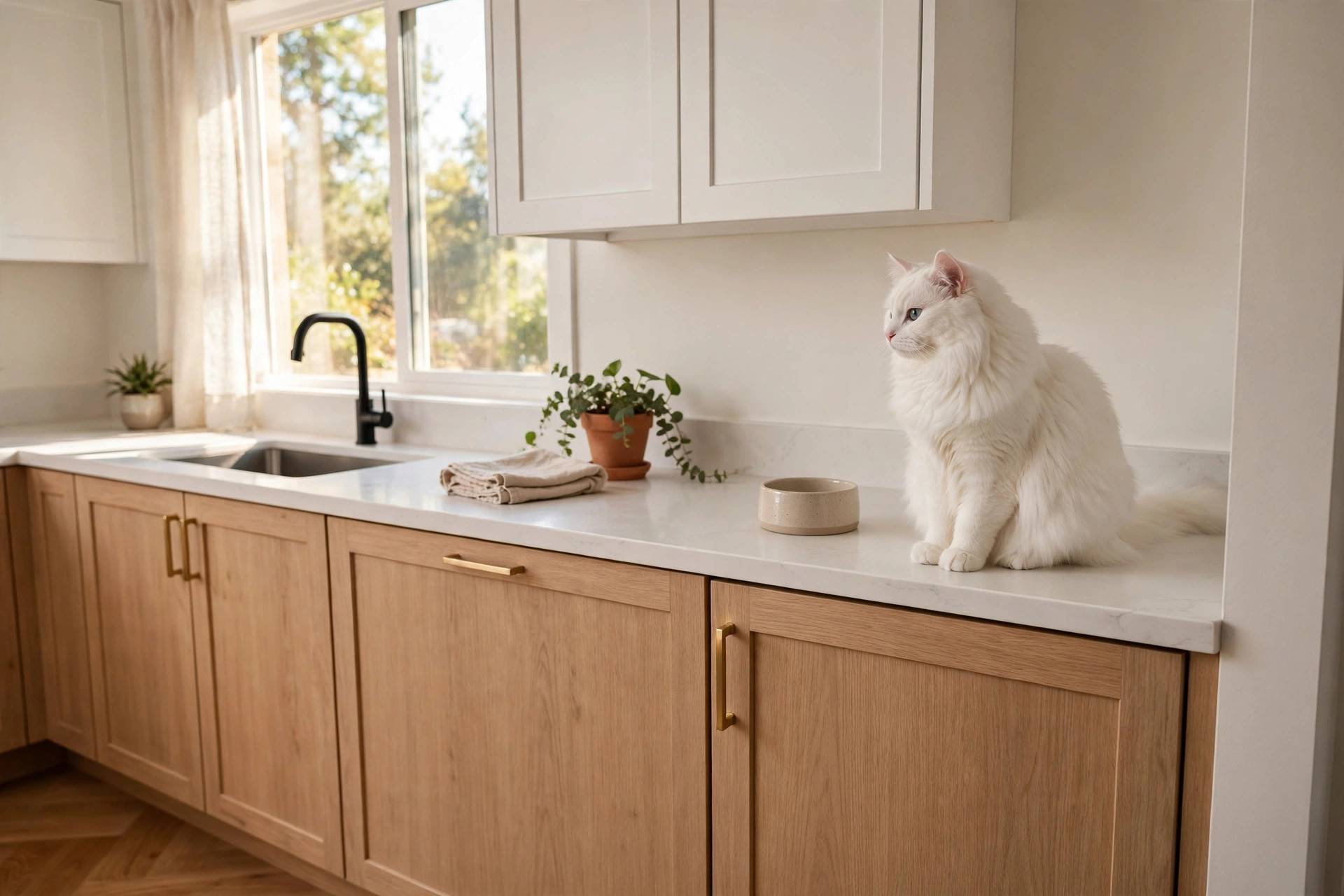
Bathroom & Laundry: Small Rooms, Big Risks
- Keep the toilet lid down. Kittens can drown in surprisingly little water, and toilet chemicals are a risk too.
- Lock away medications and cleaning products. Move them to high shelves or latched cabinets. Laundry pods are bright, squishy, and look like toys — they must be fully inaccessible.
- Close the washer and dryer doors. Cats nap in warm dryers. Check the drum before every single load.
- Stash dental floss, razors, and cotton swabs. String-like items can cause serious intestinal problems if swallowed; keep them in closed drawers or a lidded container.
- Secure the trash can. Bathroom bins collect tissues, floss, and small wrappers — all of which a bored cat will happily fish out.
If your cat ever swallows something it should not have, the ASPCA Animal Poison Control Center is the expert resource — save their number in your phone before you need it.
The Bedroom: Cozy but Full of Traps
- Mothballs and sachets: remove them. Both can be toxic and both smell interesting to cats.
- Check under the bed. Cats squeeze into box-spring tears and mattress linings. Flip your box spring and tape or replace torn fabric.
- Tidy jewelry and hair ties. Small shiny objects go straight into a cat's mouth.
- Unplug or hide chargers. Phone chargers dangling off nightstands are chew toys in a cat's eyes.
- Keep closet doors closed. Closets hide dry-cleaning bags, shoe laces, and precarious stacks — all fun, all risky.
Windows, Balconies & Doors: The Escape Routes
A cat's favorite view is also its favorite exit strategy.
- Install sturdy screens on every window you open. Standard mesh screens can pop out under a cat's weight — use pet-resistant screening or secure the frames properly.
- Never leave a balcony unsupervised. Cats do fall from balconies. Cat-proof netting or an enclosed "catio" is the safe way to give balcony access.
- Watch the front door. Door-darting is the number one way indoor cats go missing. Train everyone in the house to enter and exit carefully, and consider a baby gate in the hallway as a buffer.
- Secure blind cords. Loop cords are a strangulation risk; tie them up high or switch to cordless blinds.
Planning a bigger move with your cat? Our moving with pets checklist covers the full transition, travel carrier included.
The Cat-Proofing Supplies Checklist (Budget-Friendly)
You do not need to spend a fortune. Most of the work is rearranging, and the supplies list is short:
- Cord covers — a multi-pack covers the whole living room for a few dollars.
- Child-proof cabinet latches — for kitchen and bathroom lower cabinets.
- Pet-resistant window screens — or at minimum, reinforced standard screens.
- A tall, sturdy scratching post or cat tree — give them something legal to climb and scratch.
- Storage bins with lids — for toys, laundry, and anything dangly.
- Baby gates — to block doorways, stairs, or the kitchen during cooking.
- Double-sided furniture tape — to protect sofas and discourage counter-surfing.
- Lidded trash cans — one for the kitchen, one for the bathroom.
Wondering what all of this costs in the bigger picture? Run the numbers with our free cat cost calculator to build a realistic first-year budget.
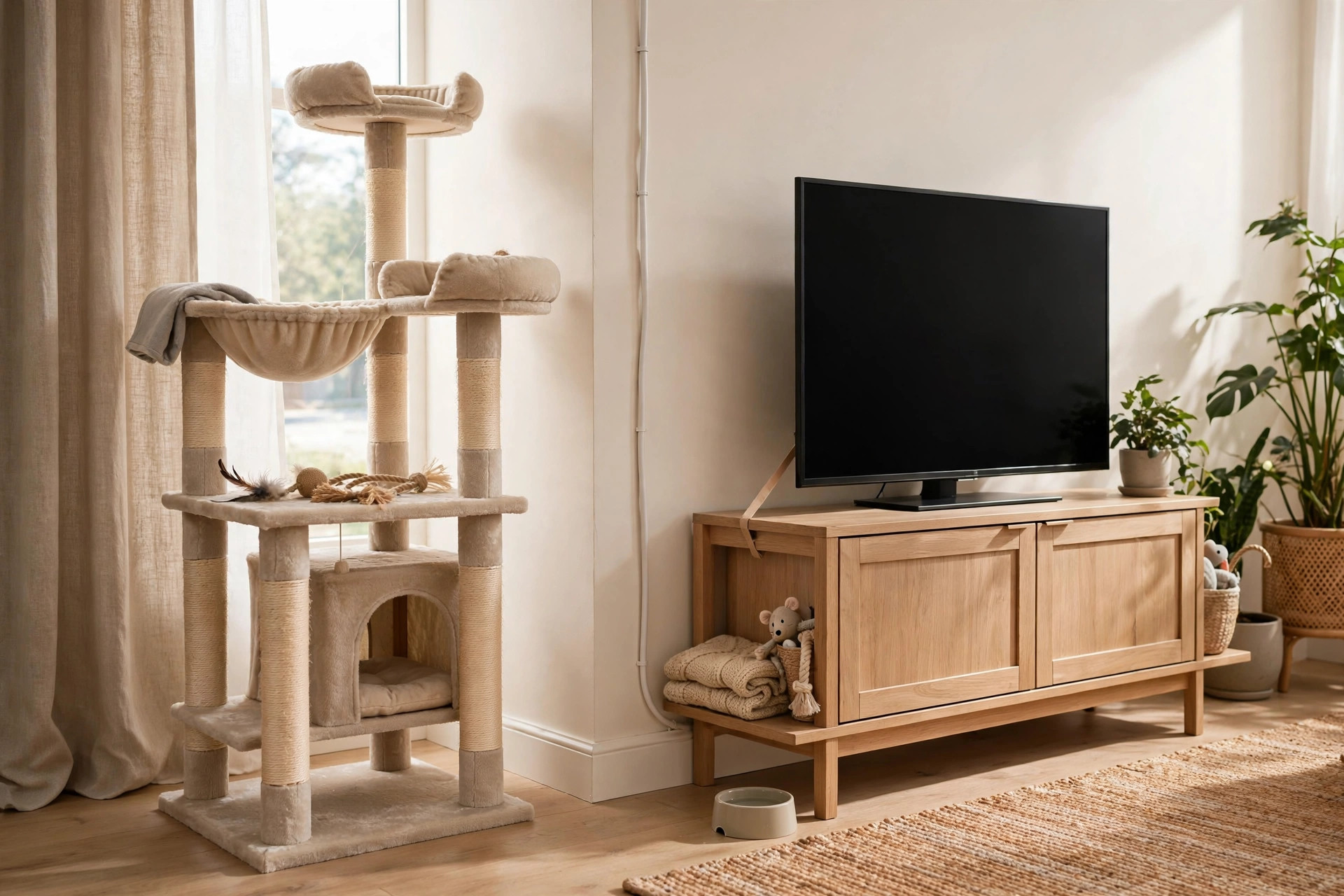
7 Cat-Proofing Mistakes Almost Everyone Makes
- Forgetting the top of the fridge. It is warm, high, and usually dusty — check what is stored up there.
- Leaving plants at cat level. Many common houseplants are dangerous if chewed; either hang them, move them to closed rooms, or switch to cat-safe varieties. The Cat Fanciers' Association points to resources on responsible cat ownership worth browsing.
- Assuming a closed door is enough. Cats learn to open lever handles and push ajar doors. Child-proof door knob covers exist for a reason.
- Skipping the garage and storage areas. Antifreeze, pesticides, and sharp tools live here — keep these doors latched.
- Leaving candles and wax warmers lit. A swishing tail plus an open flame is a fire risk; switch to flameless candles.
- Ignoring the fireplace. An open fireplace needs a secure screen, and the chimney damper should stay closed when not in use.
- Proofing once and stopping. Cats get bolder as they settle in. Do a second sweep after the first month — the risks you missed will be obvious by then.
Frequently Asked Questions
How long does it take to pet-proof a house for a cat?
Most homes take one focused weekend afternoon — roughly 3 to 4 hours — to work through room by room. The biggest time sink is usually cord management and moving breakables. Plan a second quick sweep a month later, once you know your cat's habits.
What is the first thing I should do before bringing a cat home?
Set up one small "safe room" — a single closed room with food, water, a litter box, a scratching post, and hiding spots. Let the cat settle there for a few days while you finish proofing the rest of the house. It reduces stress and keeps the cat contained while you work.
Can I pet-proof my home without buying anything?
Yes, for the most part. The majority of proofing is rearranging: moving breakables up high, closing doors, tucking cords behind furniture, and clearing clutter. The paid items (cord covers, latches, screens) are cheap upgrades that make the job much easier and safer.
How do I keep my cat off the kitchen counter?
Make the counter boring and somewhere else exciting. Remove all food and interesting smells, add double-sided tape along the edge for a few weeks, and place a tall cat tree or window perch nearby as the legal alternative. Consistency matters — every family member has to enforce the same rule.
Are baby gates enough to keep a cat out of a room?
Standard baby gates slow most cats down but rarely stop a determined jumper. Stack two gates, use extra-tall models, or add a mesh extension on top. For rooms that must stay cat-free (like a nursery), a closed door with a knob cover is the reliable option.
Should I crate my cat while I am at work?
No — cats do not do well confined to crates for long hours. Instead, proof one or two rooms thoroughly and let the cat have that space while you are out. A bored cat in a small space will find trouble; a well-proofed room with toys, a scratcher, and a window view works far better.
Final Checklist: Do This Before Adoption Day
Pet-proofing does not have to be overwhelming — it is one careful walk-through with cat eyes. Start with the safe room, work through the kitchen and living room (the highest-risk zones), secure windows and doors, and stock the few budget supplies on the checklist above. Then give yourself permission to iterate: your cat will reveal the gaps in your defenses within days, and a second sweep will catch them.
The payoff is a home where you never have to say "no" every five minutes — and a cat that can explore confidently without getting into trouble. If you are still in the planning stage, our cat cost calculator will help you budget the whole first year, and CalcPet's free tools cover everything from age conversions to breed quizzes. Welcome home, cat parent.