Why most cats hate carriers — and what actually helps
Most cats do not hate the carrier itself. They hate what it means: being grabbed, pushed through a small dark door, then driven somewhere strange. The carrier only appears on vet days, so it becomes the warning sign. The good news is that the carrier you buy can remove most of the fight — a top opening instead of a front door, zippers a cat cannot paw open, and a carrier that lives out in the open instead of in a cupboard.
This guide covers four carriers from CalcPet's catalog that suit cats who resist, panic, or escape — each one named, rated by real Amazon buyers, and linked so you can check the current price. No carrier here is crash-tested, and we say so plainly: these picks are about making the trip less stressful, not about crash protection. If crash safety is your priority, look for a carrier with an independent crash-test rating.
Disclosure: CalcPet is reader-supported. As an Amazon Associate, CalcPet earns from qualifying purchases made through links on this page, at no extra cost to you. Ratings below come from the products' Amazon listings as stored in our catalog.
Quick picks: the best carriers for cats that hate carriers
- Best Top-Load Pick: Petmate Two Door Top Load Kennel — lower your cat in from above instead of pushing them through a door.
- Best Escape-Proof Pick: Morpilot Soft-Sided Carrier (Locking Zippers) — locking zippers and a safety buckle for determined escape artists.
- Best Budget Soft-Sided Pick: Henkelion Soft-Sided Pet Carrier — light, washable, and easy to store flat. Small pets only (up to 15 lbs).
- Best Expandable Pick: Petsfit Expandable Cat Carrier — unzips to give your cat extra room on long trips and layovers.
See all of our tested-format picks on Pet Parent Picks.
How to choose a carrier for a cat that hates carriers
Before the picks, four decisions matter more than the brand. Get these right and almost any decent carrier works better.
1. Top-load beats front-load
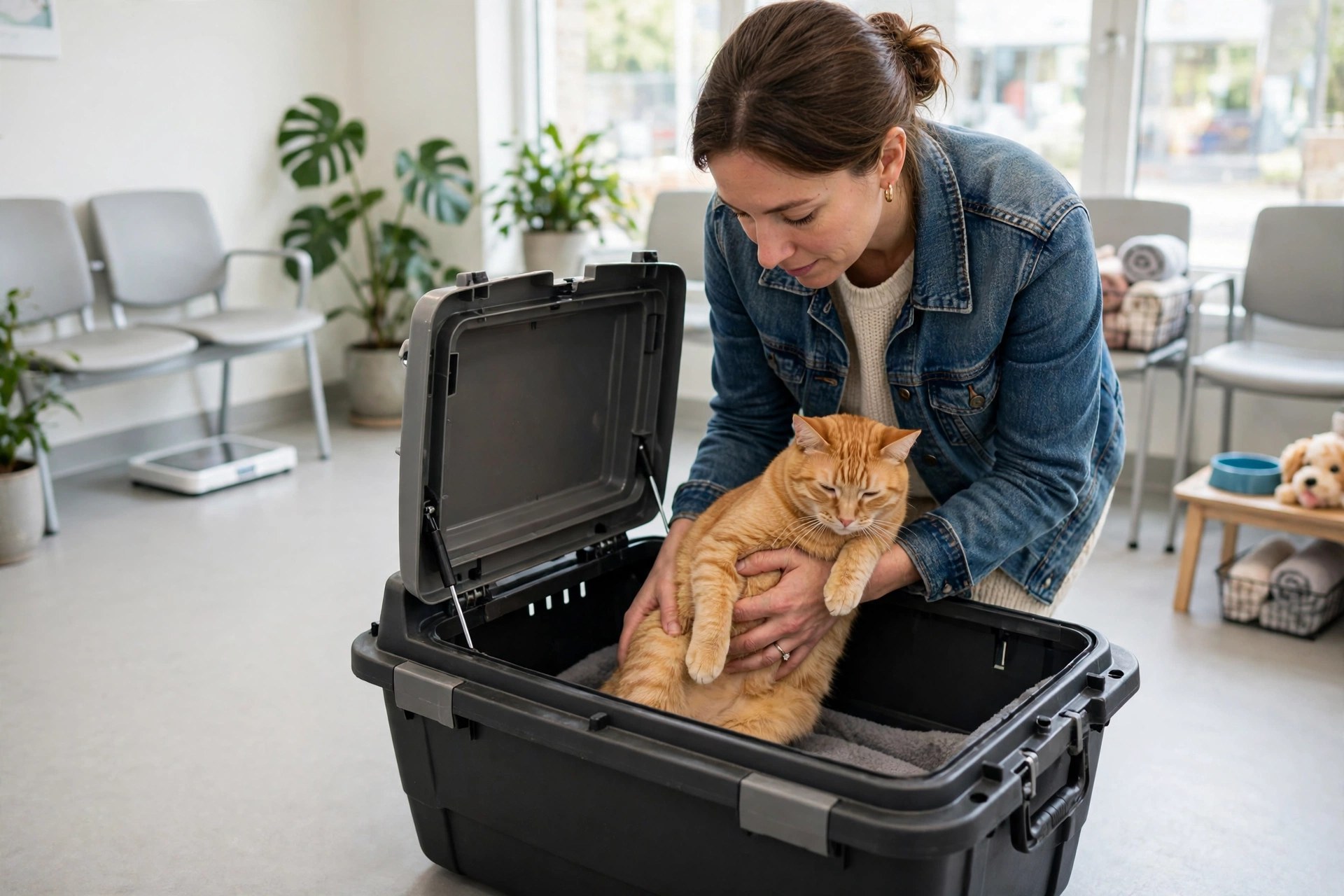
A cat braces against a small front door. Lowering a cat into a top opening is a different movement entirely — most cats accept it with far less struggle. Vets who practice low-stress handling often examine cats inside the bottom half of a removable-top carrier, so the cat never has to be lifted out at all. If your cat's main panic moment is loading, a top-load carrier is the single biggest upgrade you can buy.
2. Measure before you buy
Measure your cat from nose to the base of the tail and add 3–4 inches — that is the minimum interior length. Your cat must be able to stand, turn around, and lie down without crouching. A carrier that is too small adds panic; a carrier that is far too big lets a nervous cat slide around in the car. The Petmate pick below has no dimensions stored in our catalog, so check the listed dimensions for the exact size you order.
3. Zippers are the escape route
Clever cats learn zippers. If your cat has ever nosed a zipper open mid-trip, you need locking zippers or a safety tether — not a stronger bag. The Morpilot and Petsfit picks below both have self-locking zippers, and the Morpilot adds an interior safety buckle.
4. Make the carrier furniture, not a warning sign
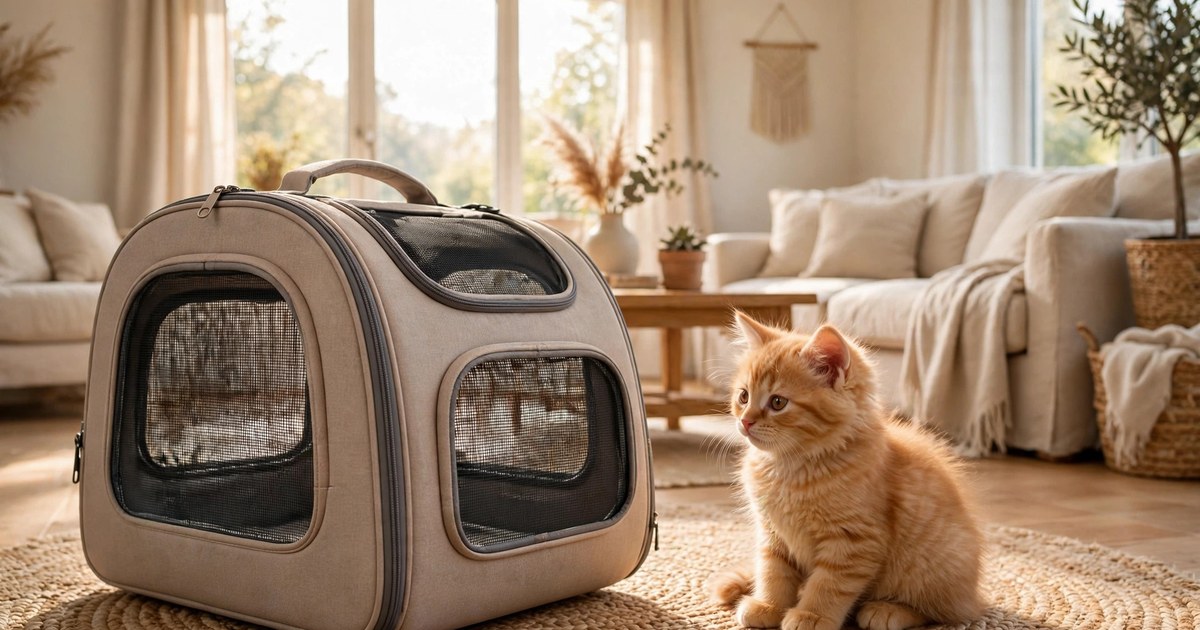
The single most effective trick costs nothing: leave the carrier out in the open with the door open, a familiar blanket inside, and the occasional treat. A carrier stored in a cupboard only appears on vet day, so it becomes the fear cue. A carrier that sits in the living room all week is just another sleeping spot. The acclimation plan at the end of this guide walks through it day by day.
The 4 best cat carriers for cats that hate carriers
Petmate Two Door Top Load Dog & Cat Kennel
- Top AND front doors — lower your cat in instead of pushing them through
- Sturdy hard-sided shell with 360-degree ventilation slots
- Steel-wire front door with secure latch; easy to hose down and clean
As an Amazon Associate, CalcPet earns from qualifying purchases.
The Petmate is the workhorse vet carrier — the one most cats arrive at the clinic in — and it earns the top spot here for one reason: the top door. Lowering a cat in from above removes the biggest stress point of the whole trip, and the front door is still there for the vet, so your cat can be examined without a wrestling match. The hard shell is easy to hose down after an accident, which matters more than it sounds: a carrier that smells of a previous bad trip is a carrier your cat will fight harder next time.
Best for: Anxious cats and vet visits; top-loading pick.
Pros:
- Top loading removes the biggest stress point
- Durable and easy to clean
- Great value
Cons:
- Basic looks; no included padding — bring your cat's own blanket
- Bulkier to store than soft carriers
Who it is NOT for: owners who need a carrier that folds flat for storage, or anyone who wants a soft, lightweight carry. And remember: check the listed dimensions for the exact size you order, as no dimensions are stored in our catalog for this one.
Morpilot Soft-Sided Pet Carrier for Large Cats (Locking Zippers)
- Locking zippers plus interior safety buckle for determined escape artists
- Roomy boxy shape with real headroom; rated for cats up to 25 lbs
- Three entry points (top, front, back); removable washable cushion
As an Amazon Associate, CalcPet earns from qualifying purchases.
If your cat's trick is escaping, this is the pick. Locking zippers plus an interior safety buckle deal with the exact failure that ruins trips: a cat nosing a zipper open in the car or the waiting room. Three entry points (top, front, back) mean you can load from above when your cat resists the front door, and the boxy shape with real headroom suits larger cats — it is rated for cats up to 25 lbs, which makes it the roomiest soft carrier on this list. It folds flat for storage, and the cushion comes out for washing.
Best for: Strong or clever cats; best escape-proof pick.
Pros:
- Genuinely escape-resistant hardware
- Spacious for large cats
- Folds flat for storage
Cons:
- Dark fabric shows light pet hair
- Bulkier than ultra-light carriers
Who it is NOT for: owners of small, calm cats who want the lightest possible bag — this one is built for strength and space, not for minimal weight. If your cat is large, also see our best cat carriers for large cats guide.

Henkelion Soft-Sided Pet Carrier
- Soft-sided carrier for pets up to 15 lbs
- Airline-approved dimensions; collapses flat
- Machine-washable with multiple mesh windows
As an Amazon Associate, CalcPet earns from qualifying purchases.
The Henkelion is the light, simple, budget-friendly soft carrier — and the bestseller tag is earned, with owners reporting thousands bought in a recent month. Multiple mesh windows let a nervous cat see what is happening around them, which many cats prefer to a dark box, and the whole carrier is machine-washable, so a stressed accident does not ruin it. It collapses flat, so it can live in a cupboard without taking over the house.
Best for: Vet visits and airline travel with small pets.
Pros:
- #1 Best Seller in Dog Soft-Sided Carriers
- 8,000+ bought in a recent month
- Light and easy to store flat
Cons:
- 15-lb limit — not for bigger dogs
- Soft sides will not contain determined chewers
- Shoulder-strap comfort varies by reviewer
Who it is NOT for: bigger cats (this is the standard 15-lb version — a 20-lb cat will not fit comfortably), determined chewers who can work through soft sides, and anyone whose cat has already escaped from a soft carrier (see the Morpilot above instead). Airline rules change, so always confirm your airline's current carrier rules before booking.
Petsfit Expandable Cat Carrier, Airline Approved
- Side panels unzip to expand floor space at the gate or in the car
- Airline-sized footprint that fits under most seats when zipped up
- Self-locking zippers, interior safety tether, washable plush mat
As an Amazon Associate, CalcPet earns from qualifying purchases.
The Petsfit solves a different problem: time. On a long trip or a layover, a nervous cat stuck in a small box for hours gets more stressed, not less. The side panels unzip to expand the floor space once you are parked at the gate or in the car, so your cat can stretch out, then zip back to an airline-sized footprint that fits under most seats. Self-locking zippers and an interior safety tether cover the escape worry, and the plush mat is washable.
Best for: Long trips and layovers; best expandable pick.
Pros:
- Extra room exactly when it matters
- Good ventilation; doubles as a travel den
Cons:
- Expanded sections are soft mesh, not rigid
- Measure your cat against the weight limit first
Who it is NOT for: larger cats — reviewers note this suits smaller cats, so check the listed weight limit against your cat before ordering. It is also not the pick for a cat that claws through mesh; the expanded panels are soft mesh, not rigid walls.
Comparison table
| Carrier | Best for | Rating | Entry | Weight limit |
|---|---|---|---|---|
| Petmate Two Door Top Load | Anxious cats, vet visits | 4.8/5 · 4,500+ ratings | Top + front | Check listing |
| Morpilot Locking Zippers | Escape artists, large cats | Strong review base | Top, front, back | Up to 25 lbs |
| Henkelion Soft-Sided | Budget, small pets | #1 Best Seller | Top + front | Up to 15 lbs |
| Petsfit Expandable | Long trips, layovers | 4.6/5 · ~1,972 ratings | Top + front | Small cats — check listing |
How to get a carrier-hating cat into the carrier: a 7-day plan
The carrier matters, but the routine matters more. This plan works with any of the four picks above.
Days 1–2: the carrier appears. Put the carrier in your cat's favourite room with the door open and a familiar blanket inside. Do not pick your cat up. Let them sniff it on their own terms.
Days 3–4: good things happen near it. Feed a treat or a meal a few feet from the carrier, then closer, then just inside the door. Keep sessions short and calm.
Day 5: the door closes — briefly. Once your cat walks in willingly, close the door for a minute while you sit beside them, then open it. Repeat a few times. Never use this as a trap; the door should open again quickly.
Day 6: a practice trip. Carry the closed carrier around the house, then a short drive around the block. Keep it level, secure it with a seatbelt, and talk calmly.
Day 7: vet day. Load from the top if your carrier allows it, cover the carrier with a light blanket if your cat settles better in the dark, and keep the carrier on a flat, stable surface in the car. More detailed travel guidance is available from International Cat Care's travelling guide and the ASPCA's cat care pages.

If your cat panics severely every time despite a calm routine, talk to your vet about the trip itself before the next visit — there may be a better plan for that individual cat. General feline health information is available from the Cornell Feline Health Center.
Verdict: which carrier should you buy?
For most cats that hate carriers, buy the Petmate Two Door Top Load. Top loading removes the worst moment of the trip, the hard shell is easy to clean, and at 4.8/5 from 4,500+ Amazon ratings it is the best-reviewed pick here. If your cat escapes, buy the Morpilot — locking zippers and a safety buckle are the only honest answer to a cat that has already worked out how zippers work. If your cat is small, calm, and you want the lightest, cheapest option, the Henkelion is the budget pick. And if your trips are long, the Petsfit expandable is the only one that gives your cat more room when the journey drags on. Whichever you choose, leave it out at home for a week before the first real trip — the carrier your cat already sleeps in is the carrier they will not fight.
Planning a road trip with your cat? Our best pet carriers for car travel guide covers seatbelt-secure picks for the road. And if your cat is getting older, gentler travel planning matters even more — our cat age calculator can help you work out where they are in life.
Frequently asked questions
What type of carrier is best for a cat that hates carriers?
A top-loading carrier is usually the best starting point. Most cats brace against a small front door, but accept being lowered in from above. Hard-sided carriers with a removable top also let the vet examine your cat in the bottom half without lifting them out.
Is a top-loading carrier really easier?
For most cats, yes. The fight usually happens at the door, not inside the carrier. Lowering a cat in from above skips that fight entirely. The Petmate pick above has both a top and a front door, so you can load from the top and let the vet use the front.
How do I measure my cat for a carrier?
Measure from nose to the base of the tail and add 3–4 inches — that is the minimum interior length. Your cat must be able to stand, turn around, and lie down without crouching. Always check the listed dimensions for the exact size you order.
Can a nervous cat fly in the cabin?
Only if the carrier fits under the seat and meets your airline's current size and weight rules — and most large cats cannot fly in the cabin at all. Never assume a carrier is airline-approved for your cat; confirm the rules with the airline before booking. Small-pet carriers like the Henkelion and Petsfit are built to airline-sized footprints, but the airline's rules are what count.
How do I stop my cat escaping from a soft carrier?
Use locking zippers, an interior safety tether, and check the zippers before every trip. The Morpilot has locking zippers plus a safety buckle, and the Petsfit has self-locking zippers with a tether. If your cat has already escaped from a soft carrier, a hard-sided carrier with a latch is the safer choice.
How do I get my cat used to the carrier?
Leave it out in the open with the door open and a familiar blanket inside for a week before the trip. Feed treats near it, then inside it, then close the door briefly while you sit beside your cat. Short practice trips come last. A carrier that only appears on vet day will always be a warning sign.