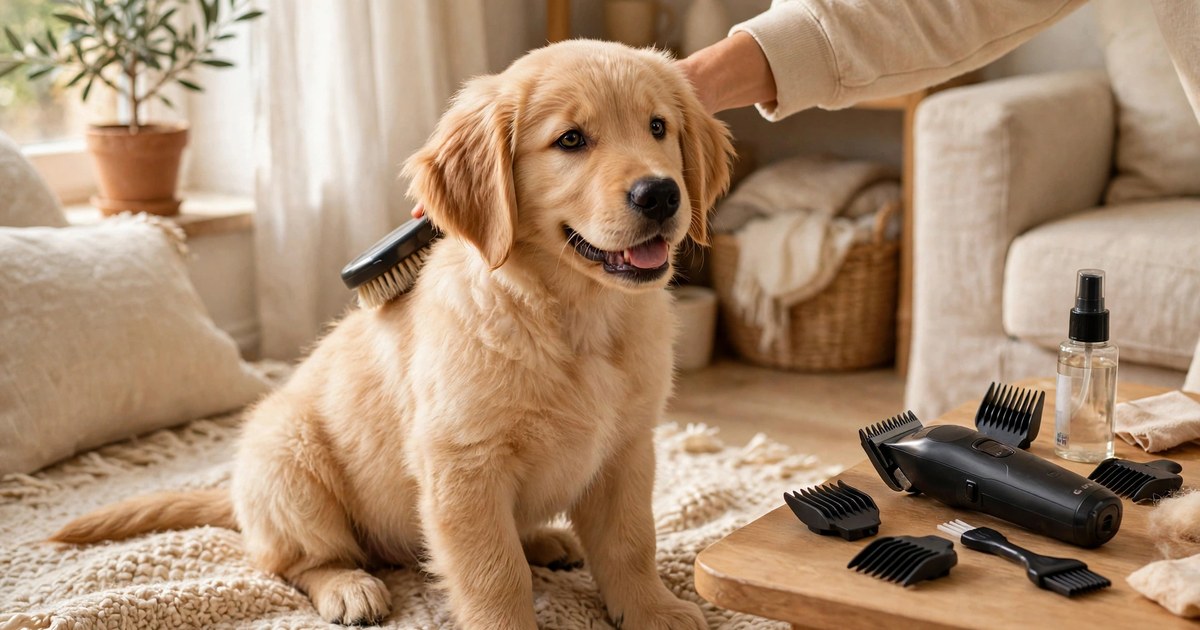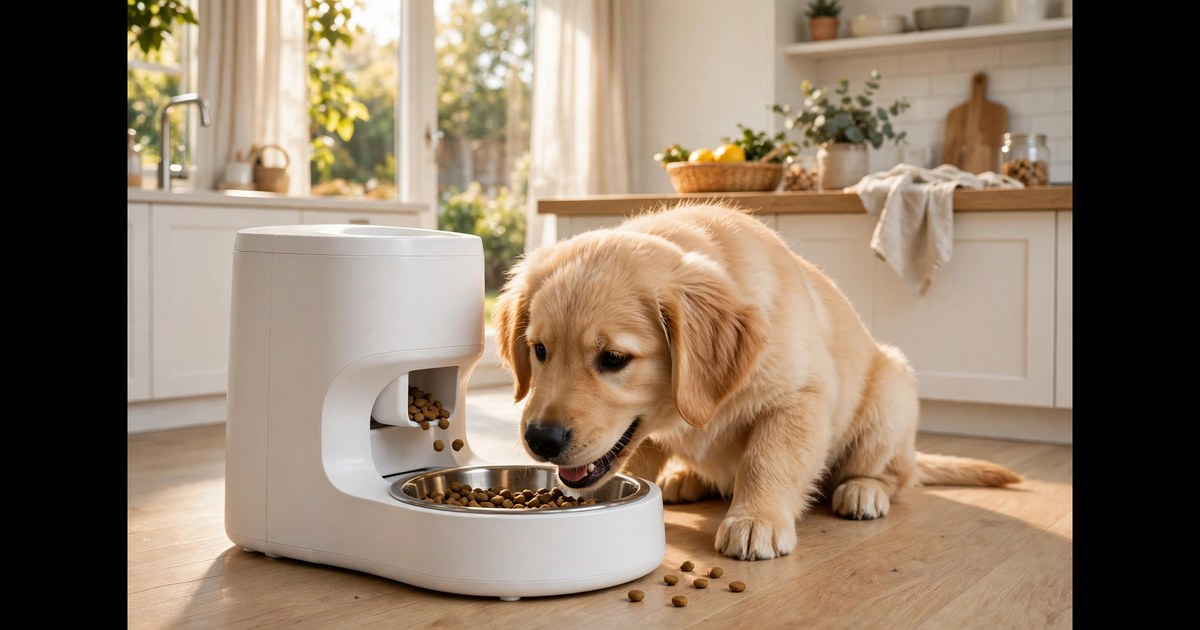
A puppy does not eat like an adult dog. Most puppies need three to five small meals a day, served on a steady schedule, in portions measured in spoonfuls rather than cups. Miss a meal and you get a hangry puppy chewing the furniture; over-serve and you get an upset stomach and a vet bill. An automatic feeder solves the schedule problem — but only if it can dispense genuinely tiny portions, handle puppy-sized kibble, and keep working when you are out of the house.
We compared Amazon bestseller lists and thousands of verified-buyer reviews to find the feeders puppy owners actually love living with. Every pick below is in CalcPet's live catalog with a working Amazon link, and every rating quoted comes from real Amazon buyer reviews.
Affiliate disclosure: This page contains affiliate links. If you buy through them, CalcPet may earn a commission at no extra cost to you. Ratings quoted are from Amazon buyer reviews and can change. Read our full disclosure.
Our Top 3 Picks at a Glance
- Best Overall — PETLIBRO Granary Automatic Pet Feeder (WiFi, 5L) — 4.1/5 · ~10,000 Amazon ratings. Up to 10 small meals a day from your phone, with a twist-lock lid puppies cannot pry open.
- Best for Precise Portions — PetSafe Smart Feed Automatic Pet Feeder (6L) — 4.0/5 · ~2,100 Amazon ratings. Portions from 1/8 cup up, plus a slow-feed mode for puppies that gulp.
- Best with Camera — PETLIBRO Automatic Cat Feeder with Camera (1080p) — 4.2/5 · ~11,700 Amazon ratings. Watch your puppy eat from anywhere, day or night.
Buying Guide: What Actually Matters for a Puppy
1. Puppies eat little and often — your feeder must too
General feeding guidance is consistent on this point: puppies typically do best with three to five smaller meals a day, while most adult dogs do well on two. That means your feeder needs to schedule at least 4 meals a day and dispense small amounts each time. The PETLIBRO Granary schedules up to 10 meals a day and the PetSafe Smart Feed up to 12 — both comfortably cover a puppy's day. A feeder that only manages two meals a day is an adult-dog feeder, not a puppy feeder.
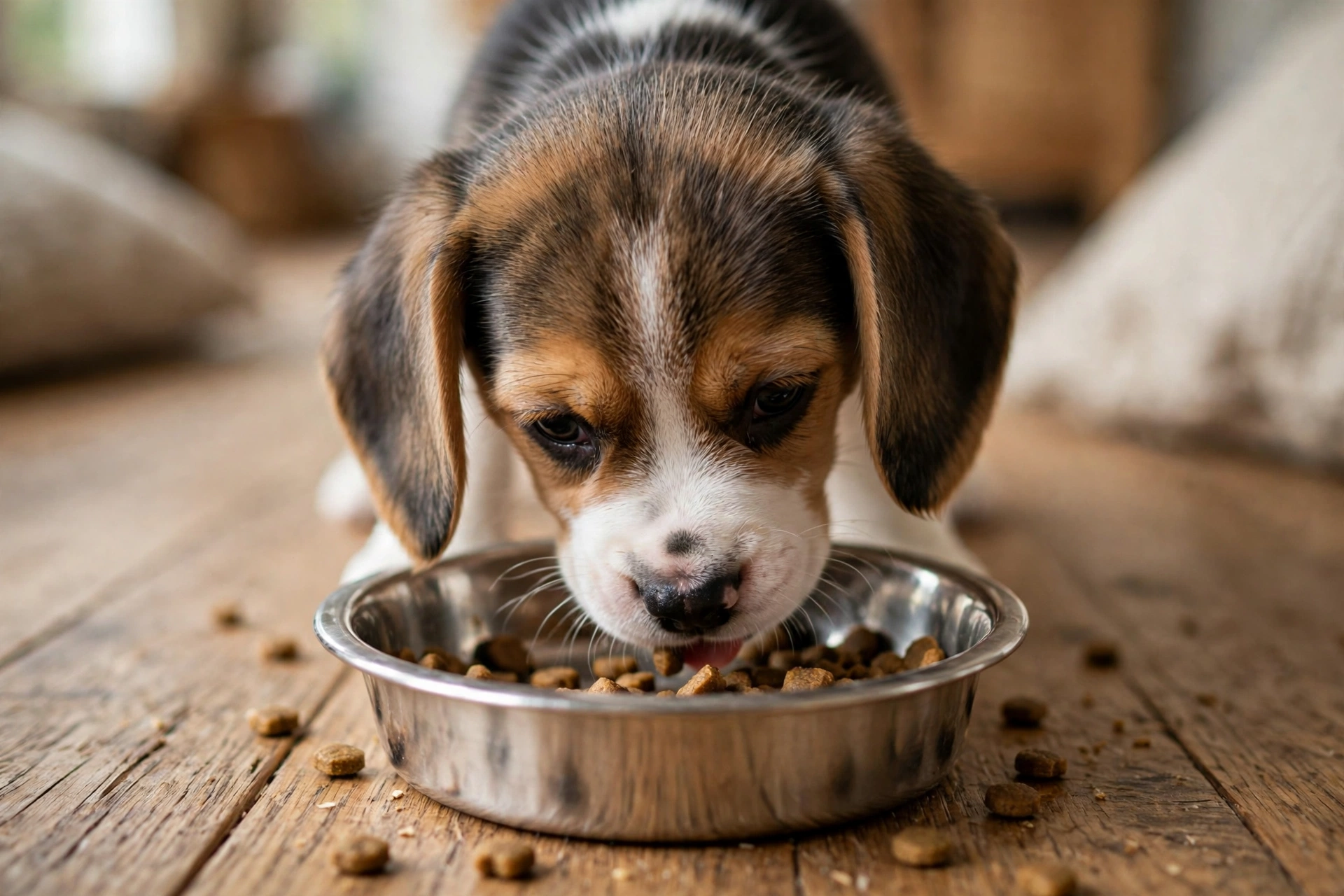
2. Portion size matters more than hopper size
A young puppy may eat as little as 1/2 to 1 cup of food a day, split across several meals — so a feeder whose minimum portion is 1/2 cup can serve a whole meal in a single dispense. Look for models that dispense in small increments (around 1/8 cup or about 10 g per portion). The PetSafe Smart Feed goes down to 1/8 cup per meal, and the Granary dispenses in roughly 10 g portions. A big hopper is nice for fewer refills, but for a puppy it is portion precision that prevents overfeeding.
3. Check the kibble size range before you buy
Almost every jam complaint in buyer reviews traces back to oversized kibble. Puppy kibble is usually small — around 7–12mm — and most feeders specify a 2–12mm or 2–15mm range. Measure your kibble or check the bag before you order. The PETKIT is the strict one here: it needs kibble under 12mm to dispense reliably, so check your puppy's food first.
4. Wet food needs a different feeder
None of the hopper feeders in this roundup handle wet food — it spoils at room temperature within hours. If your puppy eats wet food, you need a timed-tray feeder with separate lidded compartments. The PetSafe 6 Meal is the only pick here that works for small amounts of wet or semi-moist food, and even then only as a short-term solution, not a fridge. Our kibble vs wet food scheduling guide explains the difference in full.
5. Do not skip power backup
A feeder that dies in a power cut is worse than no feeder, because you assume meals happened. Prefer models with battery backup or at least a design that keeps its last schedule when power or Wi-Fi drops. The PetSafe 6 Meal runs on batteries and keeps working through outages — a real advantage if you leave a puppy alone for a weekend.
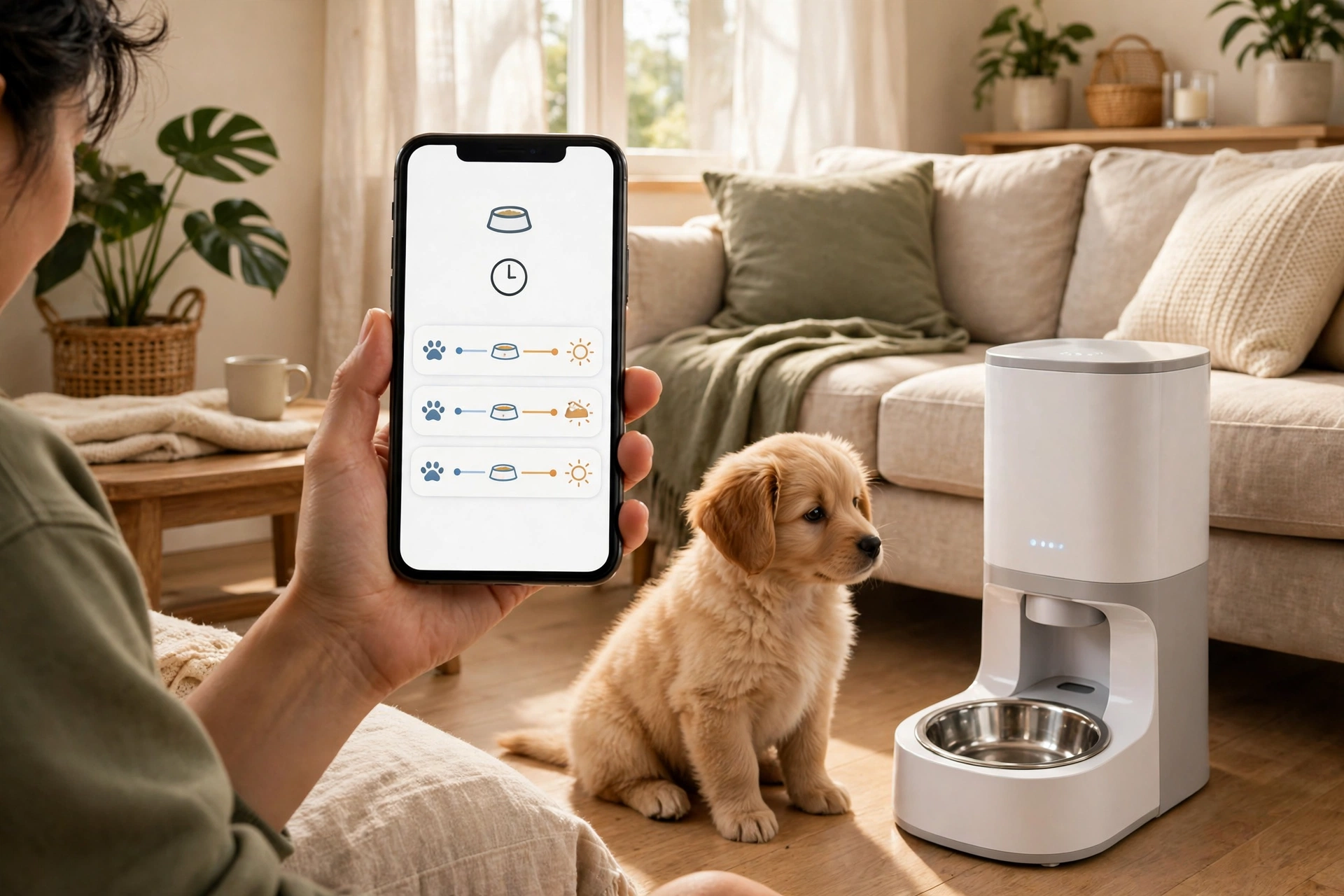
6. A camera is worth more for a puppy than for an adult dog
With an adult dog, a missed meal is an inconvenience. With a new puppy, a skipped meal can be the first sign something is wrong. A camera feeder lets you check visually that your puppy actually ate — not just trust a notification. The PETLIBRO Camera Feeder's 1080p camera with night vision and motion alerts tells you when your puppy approaches the bowl, which is genuinely useful during trips and long workdays. The AKC's guide to automatic feeders for dogs makes the same point: the right feeder depends on your dog's size, eating habits, and routine, not on the feature list alone.
The 5 Best Automatic Feeders for Puppies
1. PETLIBRO Granary Automatic Pet Feeder (WiFi, 5L) — Best Overall
PETLIBRO Granary Automatic Pet Feeder (WiFi, 5L)
- 5L hopper with 5G/2.4G Wi-Fi app control — up to 10 meals per day
- Freshness preservation with desiccant bag plus low-food sensor alerts
- Twist-lock lid keeps clever paws out of the food hopper
As an Amazon Associate, CalcPet earns from qualifying purchases.
The Granary is the feeder we recommend to most puppy owners. With roughly 10,000 verified-buyer ratings, it has been refined through years of real-world use: app scheduling is genuinely flexible, portion sizes are consistent, and the twist-lock lid defeats even the most determined food-obsessed puppy. Ten meals a day means you can split a puppy's daily food into four or five tiny servings without thinking about it, and the low-food sensor pings your phone before the hopper runs dry — exactly the detail that matters when you travel. Do the days-of-food math: a 5-litre hopper holds about 20 cups, so a puppy eating roughly 1 cup a day gets around 20 days per fill.
Pros: Huge review base (~10,000 ratings); flexible app scheduling suits shift workers and travelers; made for cats and small-to-medium dogs; 24-month warranty.
Cons: App-dependent setup; some owners report occasional Wi-Fi drops; twist-lock lid can be fiddly; dry kibble only — no wet-food support.
Best for: App-controlled scheduled feeding for cats and small dogs. Not ideal for: owners who want wet-food support or a no-app feeder.
2. PetSafe Smart Feed Automatic Pet Feeder (6L) — Best for Precise Portions
PetSafe Smart Feed Automatic Pet Feeder (6L)
- Large 6L (24-cup) hopper — fewer refills per week
- Schedules up to 12 meals/day, 1/8 to 4 cups per meal
- Slow-feed mode dispenses over 15 minutes; works with Alexa
As an Amazon Associate, CalcPet earns from qualifying purchases.
Where the Granary is the all-rounder, the Smart Feed is the specialist: capacity and portion range. Six litres is the biggest hopper in this roundup, and the 1/8-to-4-cup portion range is the widest — so it can serve a 1/8-cup snack and a full meal from the same unit, letting you split a puppy's daily food into four or five tiny meals without overfeeding. The 15-minute slow-feed mode is genuinely useful for puppies that gulp, and the conveyor design handles dry and semi-moist kibble without jamming. It comes from PetSafe, a US pet brand established in 1998, and pairs with Alexa for voice-triggered snacks.
Pros: Biggest hopper here (6L) means fewer refills; widest portion range suits puppies that need tiny meals; slow-feed mode helps speed-eaters; handles semi-moist kibble; long-established brand.
Cons: Bulkiest footprint on the counter; some owners report app connectivity hiccups; smaller review base than the category leaders.
Best for: Large dogs and multi-pet homes needing big capacity — and puppies that need very small, split meals. Not ideal for: tight kitchen counters or buyers who want the deepest feeding analytics.
3. PETLIBRO Automatic Cat Feeder with Camera (1080p) — Best with Camera
PETLIBRO Automatic Cat Feeder with Camera (1080p)
- 1080p HD camera with night vision and 2-way audio
- Stainless steel slow-feed tray; app scheduling with motion alerts
- #1 ranked in Automatic Cat Feeders on Amazon
As an Amazon Associate, CalcPet earns from qualifying purchases.
If you want to see that your puppy actually ate — not just trust a notification — this is the one. The 1080p camera with night vision lets you check in from anywhere, and two-way audio means you can call your puppy to the bowl. It holds the #1 spot in Automatic Cat Feeders on Amazon, backed by roughly 11,700 ratings, the largest buyer base in this roundup. The stainless steel slow-feed tray suits puppies that inhale their food, and motion alerts tell you when your puppy approaches the feeder — useful during trips, when a skipped meal is the first sign something is wrong. The hopper is smaller than the Granary's 5 litres, but for a puppy eating a cup a day that still means well over a week per fill.
Pros: Check in on your puppy visually at mealtimes, day or night; slow-feed tray design suits fast eaters; strongest rating base here (~11,700 ratings).
Cons: Priciest option in this roundup; camera features need a stable Wi-Fi connection; single tray — not ideal for two puppies.
Best for: Owners who want to watch their pets at mealtime. Not ideal for: two-puppy homes or buyers on a tight budget.
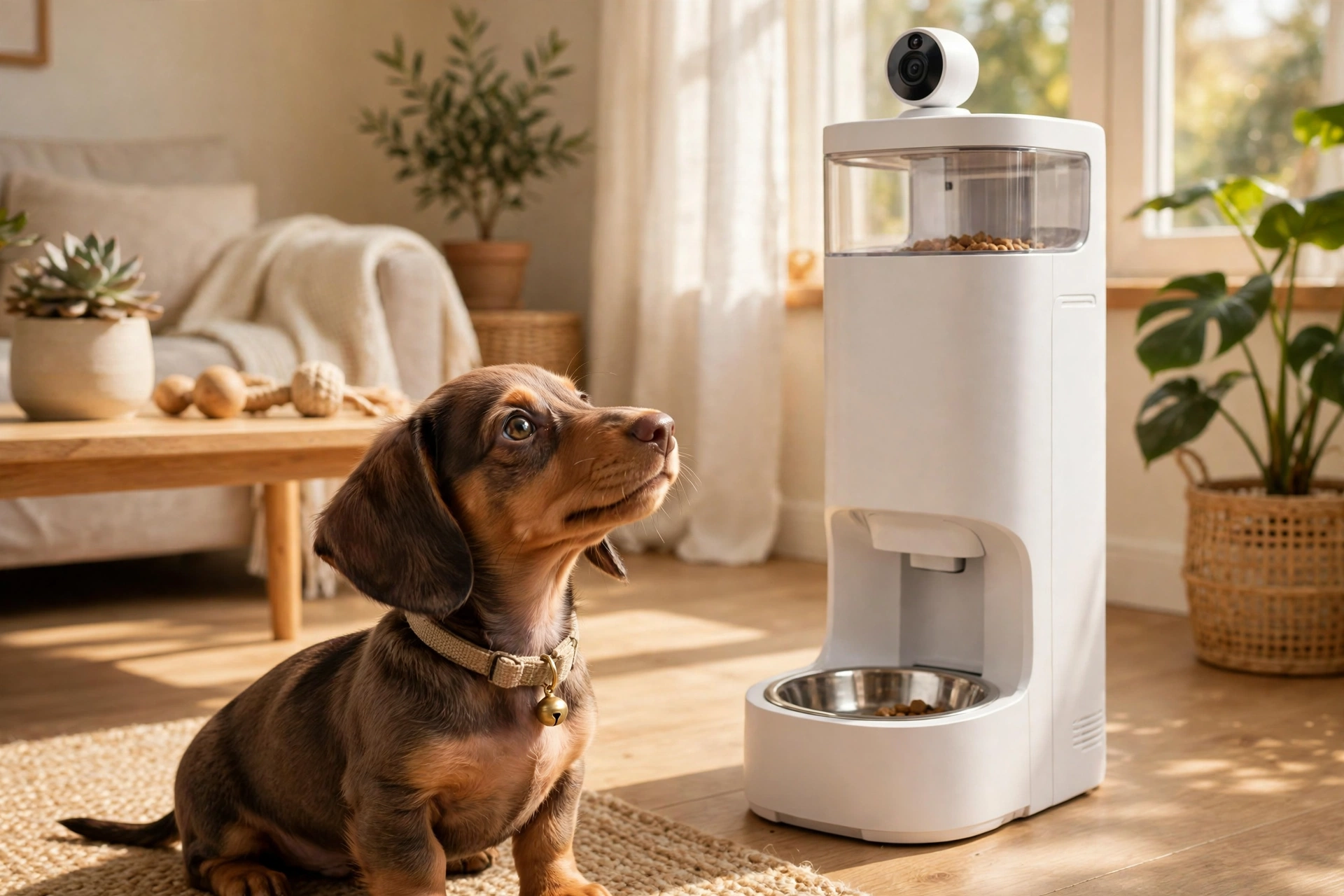
4. PETKIT Automatic WiFi Pet Feeder — Best for Feeding Records
PETKIT Automatic WiFi Pet Feeder
- Remote app control with feeding records and portion tracking
- Fresh-lock sealing with desiccant keeps kibble fresh longer
- 304 stainless steel bowl; ~15 days of food for one adult cat
As an Amazon Associate, CalcPet earns from qualifying purchases.
PETKIT's feeder stands out for owners who like data: the app keeps a full feeding history, so you can spot at a glance if your puppy skipped a meal — and with a new puppy, that record is worth more than it sounds. The fresh-lock sealing system and desiccant keep kibble crunchy, and the 304 stainless steel bowl is a hygienic choice. The "~15 days of food" figure is for one adult cat, so a puppy eating a similar amount gets roughly the same stretch per fill. The pet-proof top lock defeats the clever paws that learn to pry open lesser lids. The one hard limit: kibble must be under 12 millimetres to dispense reliably, so measure your puppy kibble first — most puppy formulas are under 12mm, but chunkier ones are not.
Pros: Detailed feeding history in the PETKIT app; hygienic stainless steel bowl; pet-proof top lock defeats sneaky paws; fresh-lock sealing keeps kibble fresh.
Cons: 2.4GHz Wi-Fi only (no 5GHz); premium pricing vs. basic timed feeders; kibble must be under 12mm — check your puppy's kibble size first.
Best for: Tech-friendly owners who want detailed feeding records. Not ideal for: kibble over 12mm or owners who want the longest refill interval.
5. PetSafe 6 Meal Automatic Pet Feeder — Best No-App Pick
PetSafe 6 Meal Automatic Pet Feeder
- 6 timed compartments plus 1 always-open tray
- Digital clock timer — no Wi-Fi or smartphone needed
- Tamper-resistant locking lid; dishwasher-safe trays
As an Amazon Associate, CalcPet earns from qualifying purchases.
Not everyone wants another app. The PetSafe 6 Meal is the classic carousel feeder: six lidded compartments rotate open on a digital timer, plus one tray that is always available. It runs on batteries, so it keeps working through power cuts. For puppies, and especially for weekend trips, it remains one of the most foolproof options ever made. It is also the only pick here that handles small amounts of wet or semi-moist food reasonably well, because each compartment is a separate lidded tray rather than a shared hopper — though it is still a short-term solution, not a fridge. One honest limit: each compartment holds 1 cup, which is a full meal for many puppies — so it suits one or two meals a day better than six tiny snacks.
Pros: Dead simple: no accounts, no apps, no updates; great for short trips and weekends away; battery-powered — keeps working in power cuts.
Cons: Only 6 scheduled meals maximum; 1 cup per compartment is a full meal for many puppies, not a tiny snack; no portion flexibility within a single meal.
Best for: Simple, reliable timed meals without an app. Not ideal for: owners who need tiny 1/8-cup portions or more than a weekend of coverage.
Quick Comparison: All 5 Automatic Feeders for Puppies
| Feeder | Hopper | Meals per day | Smallest portion | Best for |
|---|---|---|---|---|
| PETLIBRO Granary | 5L (~20 cups) | Up to 10 | ~10 g | Best overall |
| PetSafe Smart Feed | 6L (24 cups) | Up to 12 | 1/8 cup | Precise small portions |
| PETLIBRO Camera Feeder | Smaller than 5L | App-scheduled | Small portions | Watching mealtimes |
| PETKIT WiFi Feeder | ~15 days for one small pet | App-scheduled | Small portions | Feeding records |
| PetSafe 6 Meal Feeder | 6 compartments, 1 cup each | Up to 6 | 1 cup per compartment | Simple timed meals |
The Verdict
For most puppy owners, the PETLIBRO Granary is the safest first choice — the ~10,000-rating buyer base, flexible app, and twist-lock lid cover the most situations with the fewest surprises, and a puppy gets around three weeks per fill. If your puppy needs truly tiny meals, step up to the PetSafe Smart Feed: its 1/8-cup minimum and slow-feed mode are the best fit for small appetites and fast eaters. Choose the PETLIBRO Camera Feeder if you travel and want visual proof your puppy ate. Pick the PETKIT if feeding records and freshness matter most — and you have checked your kibble is under 12mm. And if you would rather skip the tech entirely, the PetSafe 6 Meal just works. If you also feed a cat, our cat-specific feeder roundup covers the same picks from a feline angle, our small-dog feeder guide covers the next stage up, and our large-dog feeder guide covers the bigger end of the scale. Still deciding? Our feeder size guide walks through measuring your dog's needs, and our three-way WiFi feeder shootout compares the top smart models head to head. For general feeding guidance, the ASPCA's general dog care guide and the VCA's general feeding guidelines for dogs are solid starting points.
FAQs
How many meals a day should a puppy get from an automatic feeder?
Most puppies do best with three to five smaller meals a day. A feeder that schedules 4 or more meals lets you split the daily amount into small portions — the Granary schedules up to 10 meals a day and the Smart Feed up to 12. Adult dogs usually move to two meals a day, so a feeder that handles frequent small meals will serve your puppy well into adulthood.
What size automatic feeder do I need for a puppy?
Look for a feeder that dispenses small portions — 1/8 cup or about 10 g per portion — rather than a big hopper. A 5-litre hopper (about 20 cups) lasts a puppy eating roughly 1 cup a day for around 20 days, so capacity is rarely the problem for puppies; portion precision is.
Can automatic feeders handle puppy kibble?
Most can, but check the maximum kibble size first. Puppy kibble is usually 7–12mm, and most feeders accept 2–12mm or 2–15mm. The PETKIT is the strictest pick here — it needs kibble under 12mm — while the PetSafe Smart Feed's conveyor design handles dry and semi-moist kibble without jamming.
Can I use an automatic feeder for wet puppy food?
Only with a timed-tray feeder, and only for a short time. Hopper feeders are dry-kibble only — wet food spoils at room temperature within hours. The PetSafe 6 Meal is the only pick here with separate lidded compartments that can hold small amounts of wet or semi-moist food, and even then it is a short-term solution, not a fridge.
What happens if the power goes out?
It depends on the feeder. Models with battery backup keep running their saved schedule through an outage — the PetSafe 6 Meal runs on batteries, and the smart feeders here keep their last schedule when power or Wi-Fi drops. If you travel, battery backup is worth prioritizing.
Do I still need to check on my puppy if I use an automatic feeder?
Yes. A feeder handles the schedule, not the supervision. Check the hopper level, clean the bowl weekly, and watch that your puppy is actually eating — the camera feeder helps here, but nothing replaces a daily check-in, especially with a new puppy.
Conclusion
A puppy does not need a smaller version of an adult-dog feeder — it needs a feeder that thinks small: portions measured in eighths of a cup, a schedule that runs four or five times a day, kibble limits that fit puppy food, and a bowl a short puppy can reach. All five picks above clear that bar, and the right one depends on your routine: app control, camera check-ins, feeding records, or no tech at all. Pick the one that matches how you actually live, measure your kibble before you order, and run the feeder a few times while you are home so your puppy learns the sound means dinner. Want to know how old your dog is in human years? Try our free dog age calculator — and browse the full Pet Parent Picks hub for more top-rated gear.