Cats have a reputation for being the "cheap" pet — and compared to dogs, they usually are. But ask any cat owner and you'll hear a different story: the monthly spending has a way of creeping up, one litter refill and toy order at a time. So what does a cat actually cost per month in 2026? For most owners, the honest answer lands between $80 and $200 a month, depending on your food choices, your litter setup, and how you handle vet care. This guide breaks down every line of the cat budget — food, litter, vet visits, insurance, and the little extras — so you know exactly where your money goes and how to spend less of it.
The Quick Answer: Average Monthly Cat Cost in 2026
If you're short on time, here is the whole picture in one glance. A typical indoor cat costs most owners $80–$200 per month in 2026. Budget-conscious owners can land near $60–$85 by buying in bulk and skipping the extras, while owners who feed premium food and carry pet insurance often spend $180–$300. Here's how the monthly total breaks down:
- Cat food: $25–$60
- Litter and litter supplies: $15–$30
- Routine vet care (averaged monthly): $15–$35
- Pet insurance (optional): $15–$40
- Toys and enrichment: $5–$15
- Treats and extras: $5–$15
Typical total: $80–$200 per month. Now let's look at each line item in detail, because the range depends heavily on choices you get to make.
Cat Food: The Biggest Monthly Bill
Food is the single largest recurring cost for almost every cat owner. In 2026, a mid-range dry food runs roughly $20–$40 per month for one average-sized cat, while wet food — or a wet-and-dry mix — pushes the bill to $40–$70. Premium and specialty brands can go higher still.
Three things move your food bill more than anything else: the type of food (wet costs more than dry per calorie), the brand tier, and where you buy it. Subscription deliveries and warehouse-club bags typically cut 10–20% off shelf prices. One practical tip: figure out your cat's favorite food before you buy the giant bag. Returning an opened 16-pound bag is nobody's idea of fun.

Litter and Litter Box Supplies
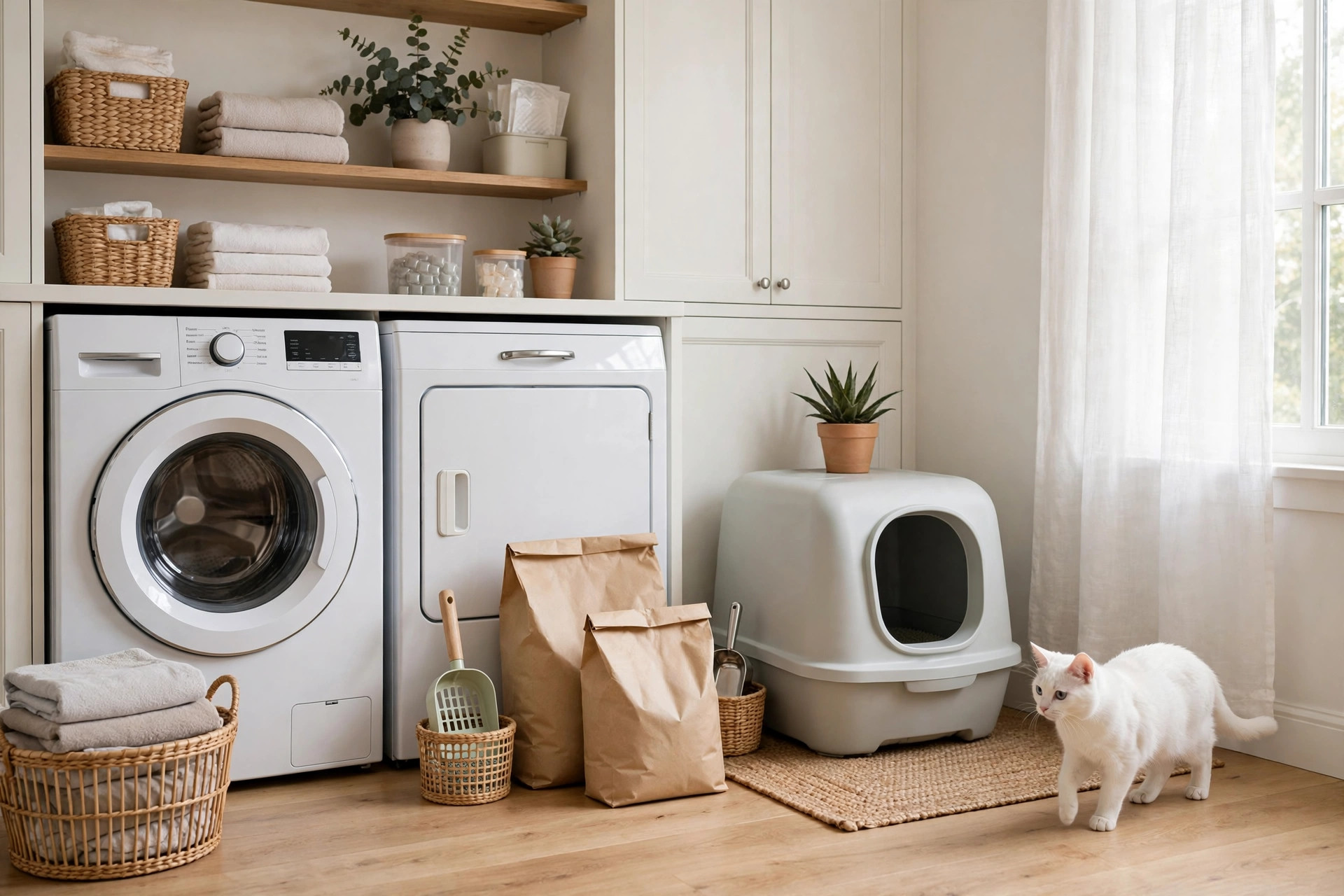
Litter is the quiet budget drain — it never makes headlines, but it shows up on your receipt every single month. Expect to spend $15–$30 monthly for one cat, depending on the litter type. Basic clay litter sits at the cheap end, while clumping, crystal, or natural litters cost more per month. A good litter scoop and a box with high sides barely cost anything over time; the litter itself is the ongoing expense.
The easiest way to spend less here: scoop daily and top up instead of doing full dumps constantly — a well-maintained box goes through noticeably less litter. Multi-cat households spend more, of course; the new kitten checklist covers the box setup basics if you're still getting organized.
Routine Vet Care, Averaged Across the Year
Most cats don't visit the vet every month, but smart owners budget for it every month anyway. Spread across twelve months, routine care — the annual wellness exam, routine preventive care, and the occasional minor visit — typically works out to $15–$35 per month for a healthy adult cat. Kittens and senior cats trend higher in their first and later years, which is why a kitten first-year budget looks so different from the steady-state numbers in this article.
The budget trick is simple: put the monthly amount aside in a small pet fund so a $200 bill in November doesn't wreck your week. Pet insurance, below, is the other way people handle the same uncertainty.
Pet Insurance: Worth Budgeting For?
Pet insurance is the fastest-growing line item in pet budgets, and in 2026 it costs most cat owners $15–$40 a month for an accident-and-illness plan. Whether it's "worth it" is a math question, not a moral one: multiply the monthly premium by 12, compare it against what one surprise emergency visit could cost, and decide how much financial risk you're comfortable carrying yourself.
Two practical notes. First, premiums rise as cats age, so a policy bought for a young cat usually costs less than one started at age ten. Second, read the exclusions before you sign — most plans don't cover pre-existing conditions, and waiting periods apply. It's purely a financial product; run the numbers for your own situation.
Toys, Scratching Posts, and Enrichment
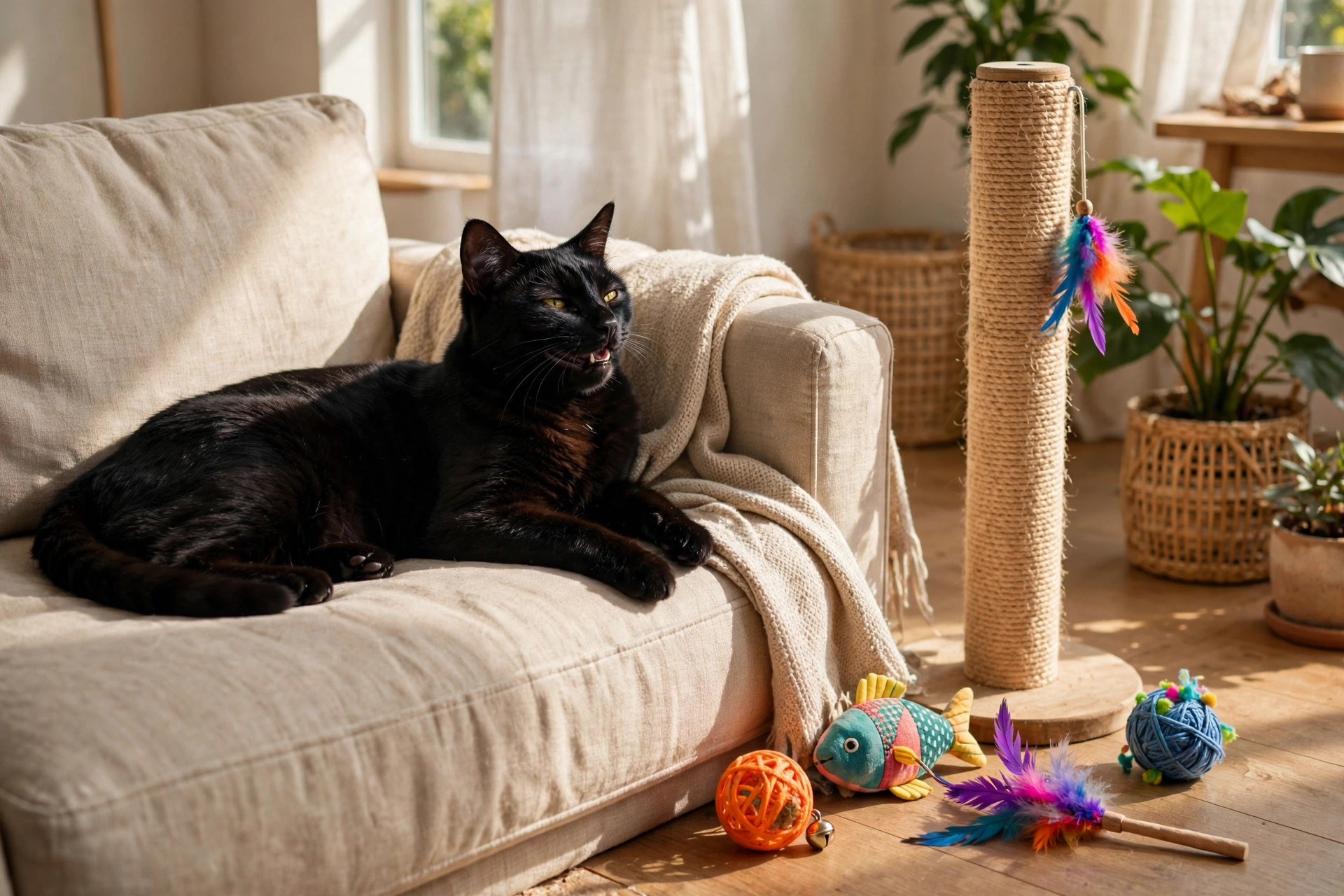
Here's the good news: entertainment is the cheapest category. Most owners spend $5–$15 a month on toys, replacement scratching pads, and the occasional new wand or puzzle feeder. Cats famously prefer the cardboard box the toy came in, so this category rewards creativity more than spending. A sturdy scratching post is a one-time purchase that protects your furniture for years — one of the best dollars-per-day deals in pet ownership.
Treats and the Little Extras
Treats, catnip, a new collar, the seasonal toy from the checkout aisle — the extras add $5–$15 a month for most households and a lot more for the enthusiastic. There's nothing wrong with spoiling your cat; just be honest about it in the budget. If you're tracking spending (and you should be), give "fun extras" its own line so it doesn't quietly double.
What About One-Time Costs?
Monthly costs tell most of the story, but your first month includes one-time purchases that don't repeat: the adoption fee ($50–$200 at most shelters), a carrier ($25–$45), a scratching post or cat tree ($30–$120), bowls, a bed, and the initial litter box setup. Most owners spend $150–$400 getting set up, on top of the first month's recurring costs. After that, you're on the steady monthly rhythm this article describes — though it's worth running the full kitten first-year budget once, so the one-time items don't surprise you twice.
7 Smart Ways to Lower Your Monthly Cat Bill
You don't need to cut corners on care to spend less. These are the savings moves that experienced cat owners swear by:
- Buy food and litter in bulk. The per-pound price of a 16-pound bag or a 40-pound litter box almost always beats the small sizes. Subscribe-and-save programs stack another 5–15% on top.
- Scoop litter daily. A clean box lasts longer between full changes — you use measurably less litter over a month.
- Compare insurance quotes before you need one. Premiums vary wildly between providers for identical coverage. Shopping once a year keeps you honest about whether your plan still earns its premium.
- Embrace the cardboard box. Cats are famously delighted by free enrichment: paper bags, boxes, crumpled paper. Save the toy budget for a couple of quality interactive toys instead of dozens of cheap ones.
- Keep your cat indoors. Indoor cats avoid a long list of expensive surprises — it's one of the biggest money-saving decisions a cat owner makes, and it costs nothing.
- Ask about multi-pet and annual-pay discounts. Many insurers and vet clinics offer them; they just don't advertise loudly.
- Track every pet dollar for two months. Most owners find one category (usually treats or toys) running 2–3x what they guessed. What gets measured gets managed.
Sample Monthly Budgets: Three Spending Levels
To make this concrete, here are three realistic monthly budgets for one indoor adult cat in 2026:
- Budget-savvy ($65–$85): store-brand dry food, basic clumping litter bought in bulk, no insurance, minimal extras. Totally doable.
- Typical ($110–$160): mid-range wet/dry mix, name-brand litter, a modest toy and treat budget, routine vet care fund or basic insurance.
- Premium ($200–$300+): premium or specialty food, crystal or natural litter, full insurance, generous enrichment and treat spending.
None of these is "correct" — the right budget is the one you can sustain every month without stress. The goal is knowing your number, not hitting someone else's.
Frequently Asked Questions
What is the cheapest way to own a cat?
Adopt from a shelter (lower upfront fees, and the cat often arrives already spayed/neutered), buy food and litter in bulk, scoop the litter box daily to make litter last, and lean on free enrichment like boxes and paper bags. Most owners can keep a healthy indoor cat happy for $65–$85 a month.
Is pet insurance worth it for a cat?
It depends on your finances, not your cat. At $15–$40 a month, insurance is essentially a bet against a big surprise bill. If a sudden $2,000 expense would wreck your budget, insurance buys peace of mind. If you can comfortably self-insure by saving $40 a month into a pet fund, that works too. Compare quotes yearly — premiums and coverage shift.
Do indoor cats cost less than outdoor cats?
Almost always, yes. Indoor cats avoid the surprise expenses that hit outdoor cats most often — injuries, parasites, and lost-pet searches all cost money. Indoor living also makes food, litter, and vet costs predictable, which is half the battle in budgeting.
How much does a cat cost in the first year versus later years?
The first year costs significantly more because of one-time setup purchases (carrier, tree, bowls, initial supplies) plus the adoption fee — typically $150–$400 on top of monthly costs. From year two onward, most owners settle into the steady $80–$200 monthly rhythm described in this guide.
Can I really keep a cat under $75 a month?
Yes, with discipline. Store-brand food in bulk, basic litter, diligent scooping, free enrichment, and a small monthly vet-care fund instead of insurance gets most owners to $65–$85. The key is tracking — unmeasured spending is what pushes budgets over.
The Bottom Line
A cat costs most owners $80–$200 a month in 2026 — food and litter do the heavy lifting, vet care and insurance handle the uncertainty, and the fun extras are where budgets quietly grow. The owners who spend the least aren't the ones who buy the cheapest everything; they're the ones who know their number and track it.
Want your exact number? Run your own figures through our free Cat Cost Calculator — plug in your food brand, litter type, and vet-care approach, and see your personalized monthly total in under a minute. Your future self (and your cat) will thank you.
Further reading: the ASPCA's general cat care guide, Cornell University's Feline Health Center, and the Cat Fanciers' Association all offer excellent reference material for cat owners.